Cybersecurity for Beginners: A Practical Roadmap to Start Your Career
A beginner-friendly, step-by-step guide to starting a career in cybersecurity. Learn fundamentals, hands-on labs, certifications, and community resources.
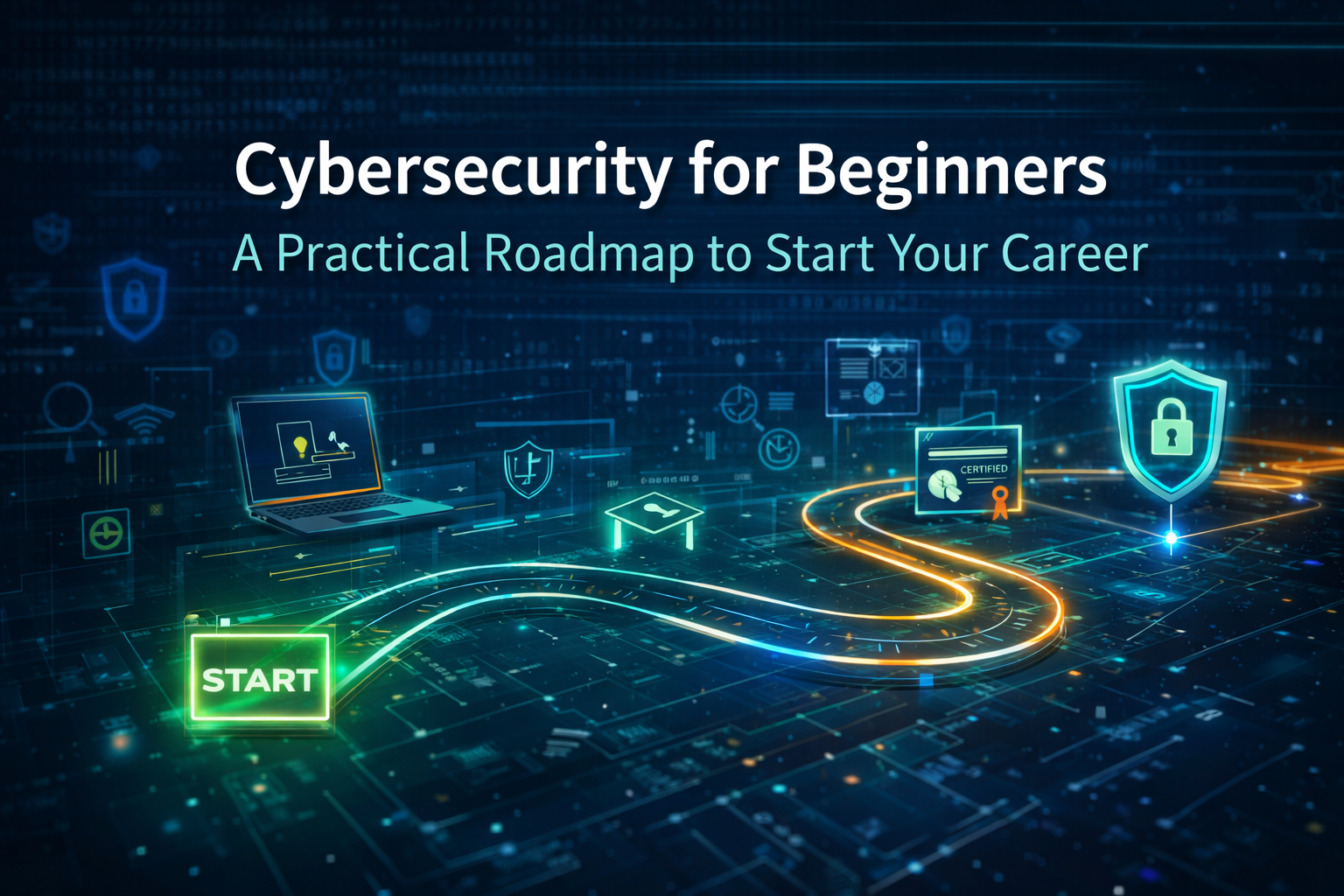
Overview
Cybersecurity is one of the fastest-growing and most in-demand technology careers today. From protecting personal data to defending organizations against large-scale cyberattacks, cybersecurity professionals play a critical role in the digital world.
If you’re a beginner wondering how to start a career in cybersecurity, this guide provides a clear, practical roadmap—from building fundamentals to hands-on practice, certifications, and community involvement.
Why Cybersecurity?
Every organization today—whether a bank, university, or startup—relies on technology. With this dependence comes the constant threat of cyberattacks. That’s why cybersecurity professionals are needed everywhere.
Beyond job demand, the field offers variety. You can explore areas like ethical hacking, digital forensics, SOC operations, OSINT, malware analysis, and more.
Step 1: Build a Strong Foundation
Before diving into hacking tools and advanced techniques, get comfortable with the basics:
- Computer Networks – TCP/IP, DNS, firewalls, VPNs
- Operating Systems – Linux and Windows administration
- Programming & Scripting – Python, Bash, C/C++ for automation and analysis
Step 2: Learn Security Fundamentals
Once you have the basics, start focusing on core cybersecurity concepts:
- Cryptography
- Web application security
- Common vulnerabilities (SQL injection, XSS, buffer overflows)
- Security policies and risk management
A must-read resource is the OWASP Top 10.
Step 3: Get Hands-On
Cybersecurity skills are built through practice.
Practice Platforms
- TryHackMe – tryhackme.com
- Hack The Box – hackthebox.com
- OverTheWire – overthewire.org
Home Lab & Tools
- VirtualBox – virtualbox.org
- VMware Workstation Player – vmware.com
Common tools worth learning:
- Wireshark – wireshark.org
- Nmap – nmap.org
- Burp Suite – portswigger.net/burp
- Metasploit – metasploit.com
Step 4: Certifications (Free, Paid & Advanced)
Certifications help validate your knowledge and show commitment.
Free Certifications / Courses
Google Cybersecurity Professional Certificate
grow.google/certificates/cybersecurityCisco Introduction to Cybersecurity
netacad.com
Paid Certifications (Intermediate)
CompTIA Security+
comptia.orgCertified Ethical Hacker (CEH)
eccouncil.orgSplunk Certifications
splunk.comELK Stack Training (Elastic)
elastic.co
Advanced Certifications
OffSec OSCP (PEN-200)
offsec.com/pen-200OffSec OSEP (PEN-300)
offsec.com/pen-300
Step 5: Join the Community
Cybersecurity is community-driven, and learning accelerates when you connect with others:
- Reddit r/netsec – reddit.com/r/netsec
- Twitter/X – x.com
- LinkedIn – linkedin.com
Step 6: Keep Practicing & Stay Curious
Cybersecurity is not a one-time learning path. New vulnerabilities and attack techniques appear constantly.
Consistency matters more than speed.
Final Thoughts
If you’re just starting out, don’t feel overwhelmed. Learn step by step, practice regularly, and accept failure as part of the process.
Cybersecurity is not just a career—it’s a responsibility to help make the digital world safer.